
In this era of social media and instant messaging, interpersonal communication and building meaningful relationships has been more challenging than ever before. To build better relationships, succeed in career, and make a lasting impact, interpersonal communication is key.

With 20 years of experience as a manager and senior executive role, I have compiled a list of must -to-adopt skills with easy to understand examples and practical tips to improve communication at work place and at home.
What is Interpersonal Communication?
The way we exchange information, ideas, experiences, and emotions with others is interpersonal communication. It happens through verbal and nonverbal communication, active listening, empathy, sympathy, compassion and more. Mastering these skills can make a positive difference in your personal and professional life.
Top 15 Interpersonal Communication Skills You Must Master
1. Active Listening
The foundation of great communication starts with truly listening which means being there 100% without any mental distraction. It means being fully focused, understanding their intent, and responding accordingly to what others are saying.
- Example: In a two way conversation, instead of preparing to respond while someone speaks, listen attentively, show your acknowledgment, and summarize their point and add your thoughts if the need be.
- Tip: Maintain eye contact, avoid interruptions, and give verbal affirmations like “I see” “OK” “Oh really” or “That makes sense.”
2. Nonverbal Communication
We knowingly or unknowingly convey nonverbal cues such as facial expressions, gestures, and posture which either reinforce or contradict the message we wanted to deliver.
Nonverbal communication is the complex interplay of gestures, expressions, and tone. This critial aspect of human connection impacts how messages are received, understood, interpreted and acted upon.
More often a time nonverbal communication reinforce verbal messages, but some times, it may contradict revealing emotions or intentions that words fail to express. A smile with crossed arms may send mixed signals, leaving the listener uncertain of the speaker’s sincerity.
On the other hand, a firm handshake with a confident posture conveys trust and authority without a single word being spoken. Understanding these nuances is not just an art but a skill that can transform personal relationships, boost professional success, and resolve conflicts effectively.
Renowned researcher Albert Mehrabian quantified its impact, and revealed that communication is 55% body language, 38% vocal elements like tone and inflection, and only 7% words. This ratio underscores that how we say something often matters more than what we say.
- Example: A smile shows friendliness, where as crossed arms might suggest defensiveness.
- Tip: Align your body language with your words. Use open gestures and maintain a relaxed posture.
3. Empathy
Empathy, in simple terms, is the ability to understand things from another person’s perspective. It’s the ability to share someone else’s feelings and emotions and understand why they’re having those feelings.
Many famous people have talked about the importance of empathy.
“I think we all have empathy. We may not have enough courage to display it.” – Maya Angelou
“Peace cannot be kept by force; it can only be achieved by understanding.” – Albert Einstine
Former President Barack Obama has said, “The biggest deficit that we have in our society and in the world right now is an empathy deficit. We are in great need of people being able to stand in somebody else’s shoes and see the world through their eyes.” – Former President Barak Obama
A workplace is a place for teamwork. For things that require a team effort, it’s crucial to relate with co-workers. Even if people are not specifically working on same project, getting along with fellow workers is still a priority. Using empathy is a vital part of a smooth working relationship. Without it, it’s much easier to fall into conflict and disagreements.
- Example: If a coworker is upset, acknowledge their feelings by saying, “I can see this is really frustrating for you.”
- Tip: Practice putting yourself in others’ shoes and responding with compassion.
4. Clarity and Conciseness
Clarity is the foundation of understanding. It’s all about expressing ideas in a way that is easy to understand, leaving no room for confusion or misinterpretation. Clarity is of paramount importance at work place because it directly impacts how well tasks are executed, decisions are made, and relationships are managed.
With a clear message, the receiver gets the intended meaning without having to guess or ask for further explanation. This has deeper importantance in written communication, such as emails, memos, reports, and proposals, where the absence of immediate feedback can lead to misunderstandings if the message lacks clarity. A well-structured message with clarity reduces the risk of errors, ensures that instructions are followed correctly, and facilitates smooth collaboration among team members.
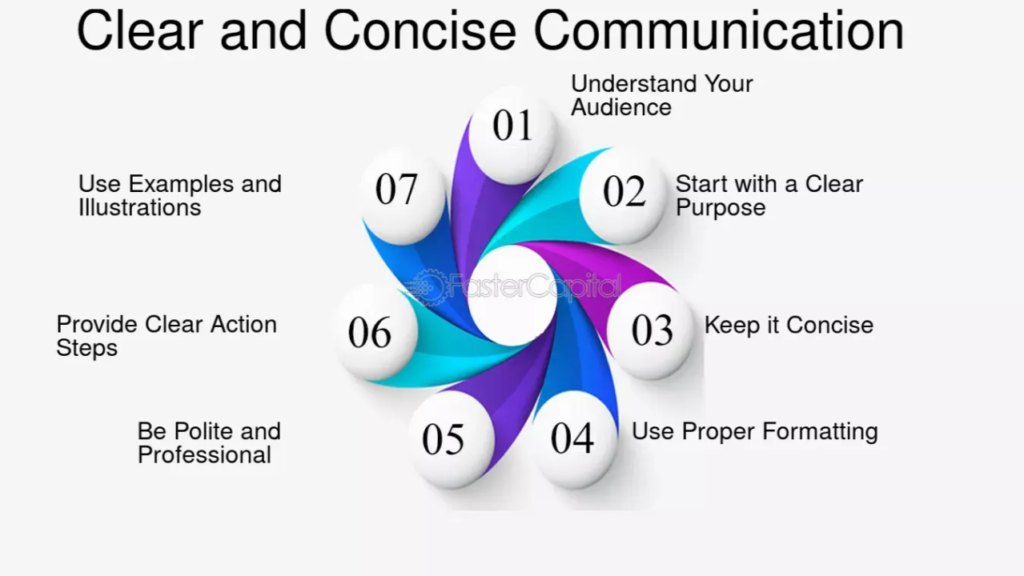
Convey your message in a way that is easy to understand without unnecessary fluff.
Conciseness is the art of being brief. It involves expressing ideas in the fewest possible words without sacrificing intended meaning. At workplace where time is of the essence, being concise helps to respect the time of others while still conveying all necessary information.
Long-winded messages can lead to distraction, or even irritation, causing the reader or listener to miss critical pin points. In contrast, concise communication gets straight to the point, making it easier for the audience to focus on the core message.
- Example: Instead of saying, “We might want to consider possibly submitting this report sooner,” say, “Let’s submit the report by 5 PM this evening.”
- Tip: Use simple yet direct language and organize your thoughts before speaking.
5. Open-Mindedness
Open-mindedness means to be receptive of new ideas, experiences, and perspectives. It allows us to expand our knowledge and understanding of the world to grow and develop as individuals.
However, open-mindedness is not something that comes naturally to everyone. It is a trait that can be developed with practice and intention.
One of the first steps that a curious, growth-minded individual can take to be open-minded is to be more self-aware. This means reflecting on one’s own beliefs, values, and biases. Becoming aware of our own perspectives and assumptions can help us recognize when we are being closed-minded or resistant to new ideas.
Another step is to actively seek out opportunities to have new experiences and perspectives. This could involve traveling to new places, trying new foods, or reading books by authors with different backgrounds and perspectives. By exposing ourselves to new ideas and experiences, we can expand our understanding of the world and challenge preconceived notions.
Be willing to consider new ideas and different perspectives.
Example: Embrace suggestions without immediately dismissing them during brainstorming sessions.
6. Constructive Feedback
Giving and receiving feedback is a key to success.
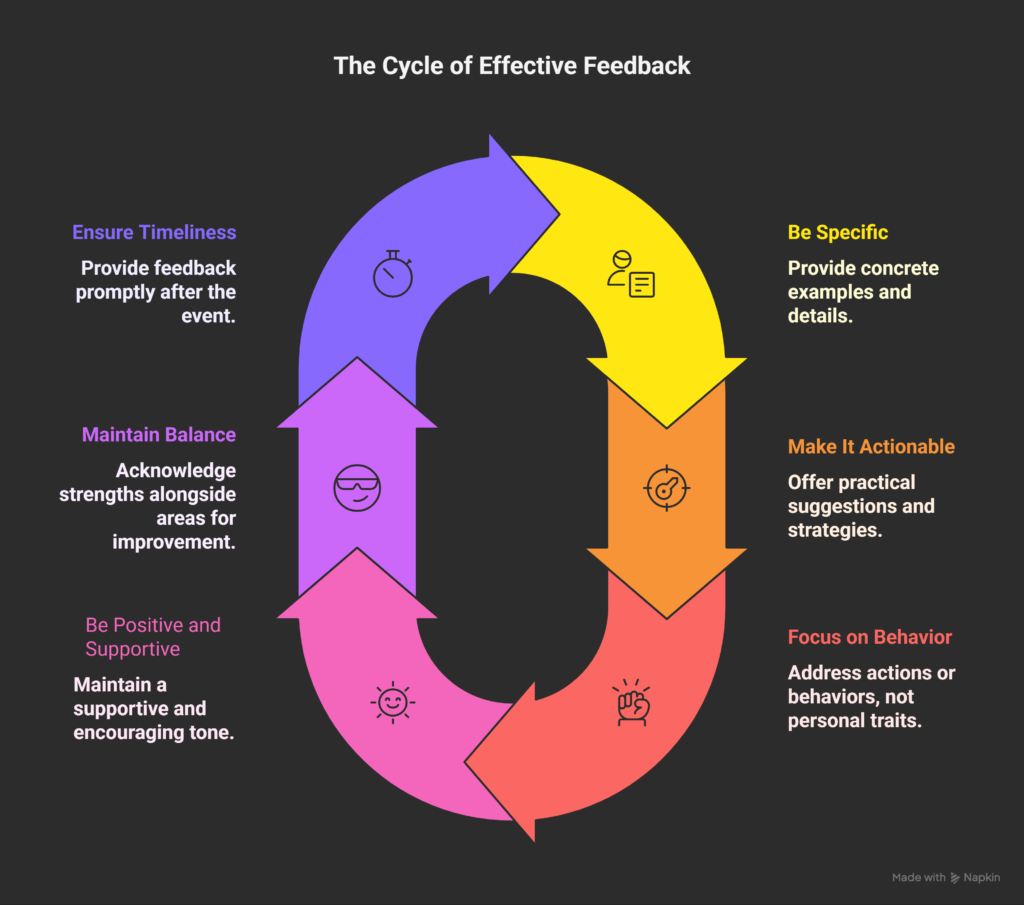
- Example: Instead of saying, “Your report is sloppy,” try, “Your report covers great points. Let’s work on making it more concise.” Be specific, focus on the behavior (not the person), and offer solutions.
7. Conflict Resolution
Conflict is inevitable where there are people. Each human beings have their own values, needs and habits, so it’s easy to misunderstand each other and fall into conflict.
Without due care and timely correction, conflict may lead to wrong decisions and disputes, bullying or harassment. Teamwork fails, morale declines, and projects come to standstill. Organizations suffer from wasted talent, elevated absenteeism, and higher staff turnover.
But conflict can be resolved with right kind of strategies. What’s more, it can bring issues to surface, strengthen relationships, and spark innovation – so long as we don’t try to ignore it!
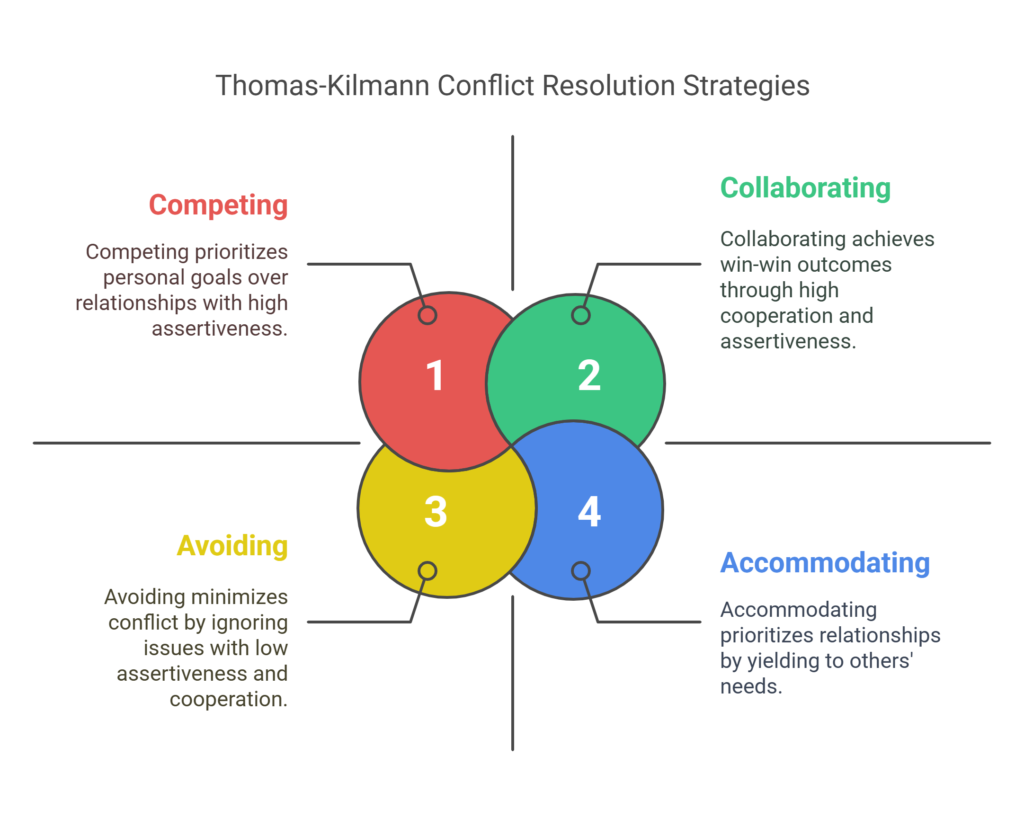
Bottom line for conflict resolution: Stay calm, listen actively, and aim for win-win outcomes.
8. Assertiveness
Being assertive means communicating directly and honestly without intentionally hurting others.
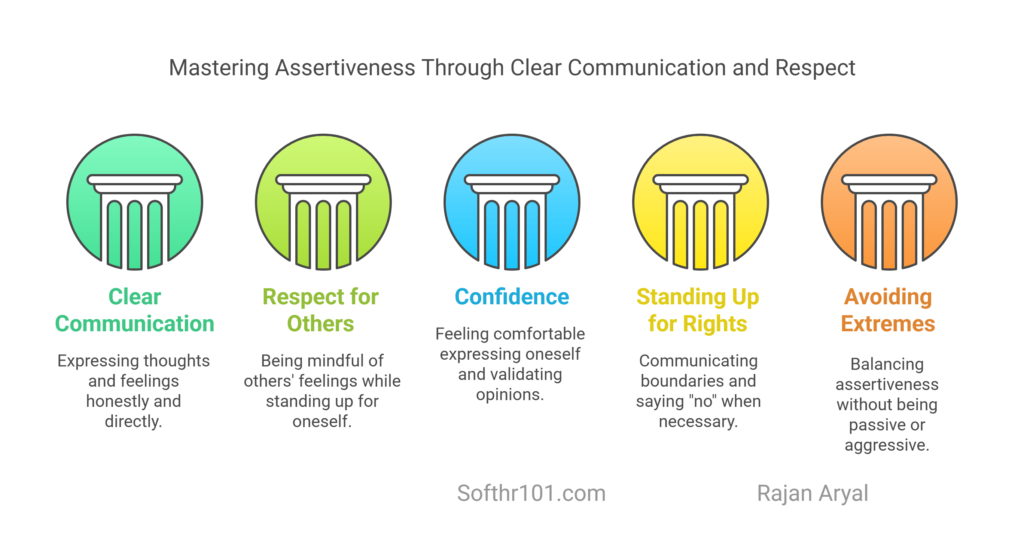
Bottom line: Focus on the issue, be presentable and respectful.
9. Adaptability
Adaptability is about adjusting the communication style as per the audience and the situation at hand. It can be realised through adjustment of tone and language of delivery keping in mind the communication preferences and needs of the audience.
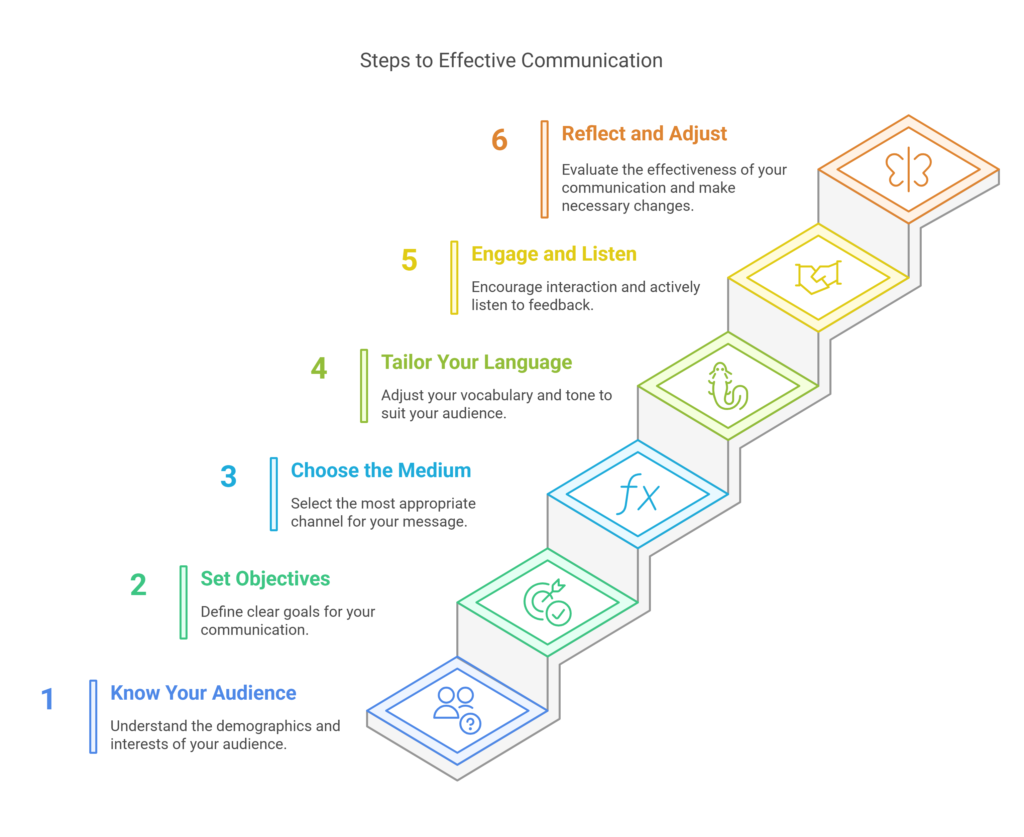
Bottom line: Assess your audience’s needs and tailor your message accordingly.
Why These Skills Matter
Having proper understanding of the interpersonal communication skills makes you a better leader, teammate, and friend. The skills explained above are crucial for building relationships, resolving conflicts, and achieving goals in any aspect of life.
Final Tips to Boost Your Communication Skills
- Practice daily
- Join workshops
- Stay consistent
By incorporating these skills into our daily interactions, we can transform the way we connect with others and create lasting positive impressions. Start today, and watch your personal and professional relationships flourish!

The articles you write help me a lot and I like the topic http://www.hairstylesvip.com
Thanks sir !